The Rural Village
The Rural Village
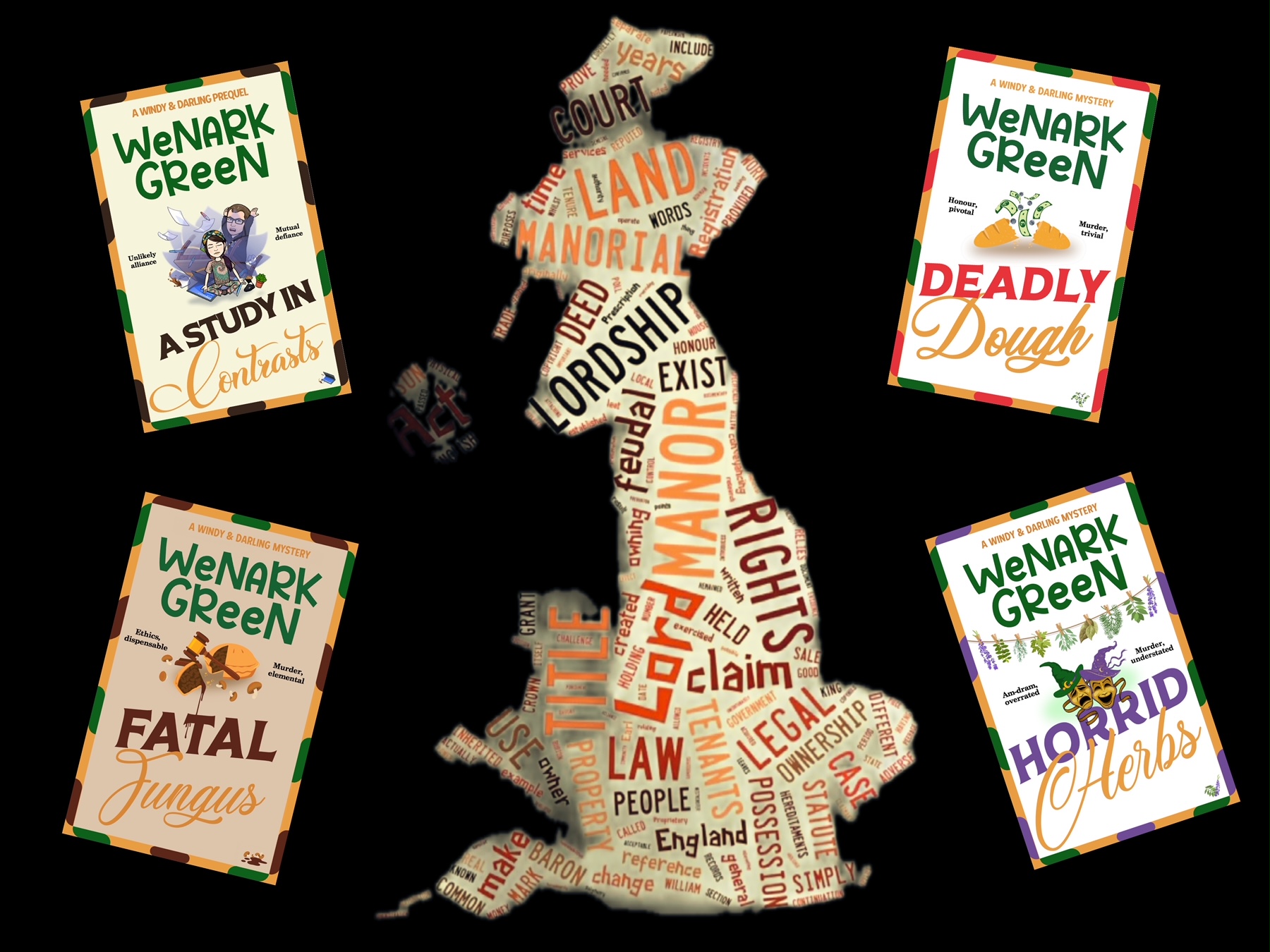
The English village is more than a place, it’s a state of mind. A landscape shaped by centuries of tradition, manorial rights, and ancient boundaries, with forgotten histories and enough local gossip to fill multiple parish archives.
Nestled among rolling hills, patchwork fields, and meandering streams, the quintessential village appears unspoilt and serene. Quaint shops line the high street. Cafes and inns welcome travellers. A centuries-old church keeps watch over worn cobblestones polished by generations of footsteps, where tractors rumble at the exact speed needed to make everyone late.
Picture honey-coloured stone cottages, thatched roofs, climbing roses, and gardens so immaculate they look competitive. Behind every clipped hedge lies a story; behind some, secrets best left buried.
Village life thrives on character. Cricket on the green, bowls competitions, flower shows, fêtes, Morris dancers, and traditions so old nobody quite remembers why they started. Farmers tend livestock, industrious bees hum between blooms, and locals debate matters of grave importance, such as hedge height, parking etiquette, and whose turn it is to organise the raffle. And, of course, potholes. Don’t forget potholes.
Life appears to move at a gentler pace. Beneath the tranquillity, friendships flourish, rivalries simmer, and long memories linger. The village inn’s optics hear more revelations than the church confessional, and everyone knows everyone else’s business, so they think.
Add every little sprig of magic to a gigantic melting pot, and that’s what makes the English village such fertile ground for mystery. Amid the beauty, charm, and timeless routines, hides unrattled skeletons, grudges, and spite. The most intriguing stories don’t always unfold in dark alleys and city streets. Sometimes they happen beside the village duck pond, at the annual flower show, or while taking afternoon tea.

The Rural Village
The English village is more than a place, it’s a state of mind. A landscape shaped by centuries of tradition, ancient boundaries, forgotten histories, and enough local gossip to fill several parish archives.
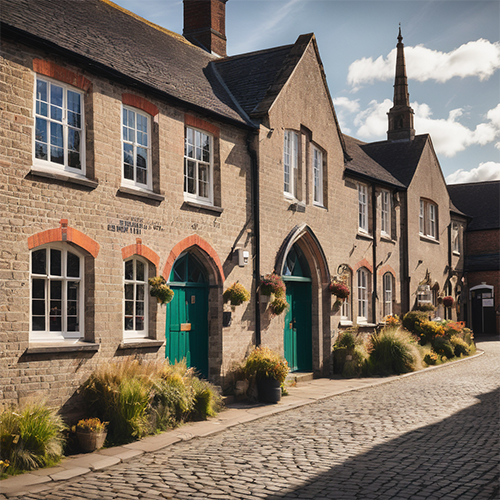
Nestled among rolling hills, patchwork fields, and meandering streams, the quintessential village appears unspoilt and serene. Quaint shops line the high street. Cafes and inns welcome travellers. A centuries-old church keeps watch over worn cobblestones polished by generations of footsteps, where tractors rumble at the exact speed needed to make everyone late.
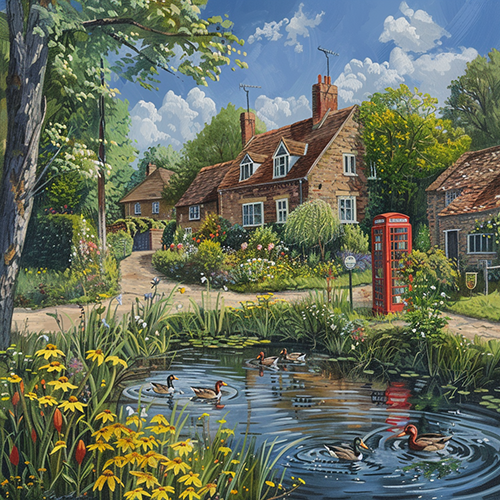
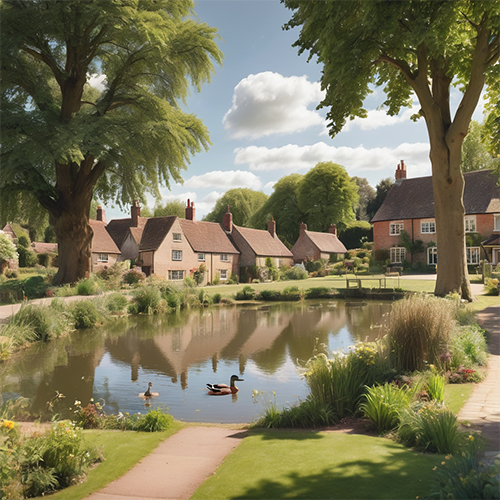
Picture honey-coloured stone cottages, thatched roofs, climbing roses, and gardens so immaculate they look competitive. Behind every clipped hedge lies a story; behind some, secrets best left buried.
Village life thrives on character. Cricket on the green, bowls competitions, flower shows, fêtes, Morris dancers, and traditions so old nobody quite remembers why they started. Farmers tend livestock, industrious bees hum between blooms, and locals debate matters of grave importance, such as hedge height, parking etiquette, and whose turn it is to organise the raffle. And, of course, potholes. Don’t forget potholes.
Life appears to move at a gentler pace. Beneath the tranquillity, friendships flourish, rivalries simmer, and long memories linger. The village inn’s walls hear more revelations than the church confessional, and everyone knows everyone else’s business, they think.
Add every little sprig of magic to a gigantic melting pot, and that’s what makes the English village such fertile ground for mystery. Amid the beauty, charm, and timeless routines, hides unrattled skeletons, grudges, and spite. The most intriguing stories don’t always unfold in dark alleys and city streets. Sometimes they happen beside the village duck pond, at the annual flower show, or while taking afternoon tea.