There comes a point in every author’s life when they must admit writing the book was the easy bit. You spend months—even years—wrestling words into a story. Edit, rewrite, agonise over commas and word repetition, bleed over the cover (not literally), and finally, as indies, press publish. Then … tumbleweed.
We know books don’t sell themselves, so what do two authors do when promotion so far hasn’t harvested fruit on novels that happen to be a by-product of their oddball, unlikely friendship?
Answer: Welcome to our latest batty idea. We’re going podcasting; guesting, not hosting. The decision surfaced not because we’ve morphed into marketing gurus or have discovered the secret to a surfeit of pesky algorithms that don’t like us and our content. And we certainly don’t intend spending forty or so minutes saying, “Our book’s available on Amazon for less than the price of a coffee,” in desperate, clichéd tones.
We, Wenark Green, are going to sell something else first. Ourselves. Us. The madness behind the manuscripts. Not in the egotistical, look-at-us-we’re-authors way, but in the way of letting people discover who, what, and why we are. The peculiar pairing. One an introvert. The other an extrovert. One living with GAD and ASD. The other with MS. One who’d rather converse with a pylon, and regards a crowded room as an endurance event while sniffing out the nearest escape route, and the other who would strike up a chat with a hat, have it confess its sins, then wear it while meditating under a delicate cherry blossom.
On paper, our friendship shouldn’t work. In reality, it does, and somewhere in the middle of this madcap, mismatched collaboration, and a vision of creating a legacy and fuelling a passion, murder mystery books happened. That’s our story, and the facts worth putting in front of people.


The temptation when promoting/selling a book is to make every appearance about the “baby” you’ve written.
- What is it about?
- Who is it for?
- Why should people buy it?
- Where can they get it?
All reasonable questions, but perhaps guaranteed to make listeners mentally wander off to check whether they blew the scented candle out. We know books aren’t babies, but products.
The more powerful proposition’s different.
- Come and meet Wen and Mark.
- Find out why they became friends.
- Discover how they write together.
- Listen to them disagree.
- Hear what makes them laugh.
- Understand what their diagnoses have taught them about themselves, without turning either condition into a marketing gimmick.
Let people hear the chemistry, the chaos, the banter. Let them hear the moments when two converse personalities arrive at the same ridiculous idea. Listeners might wonder what we two oddballs have written. That’s the difference between selling a book and provoking curiosity about the people who wrote it.

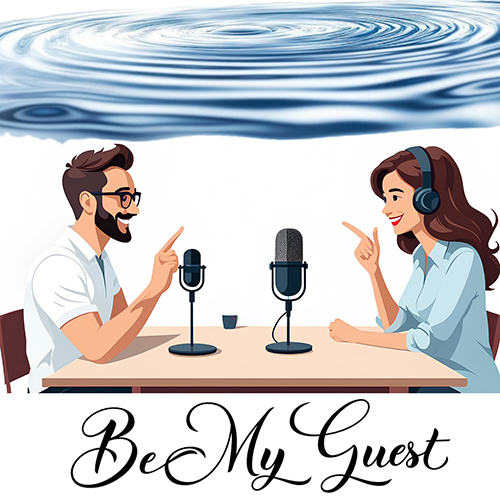
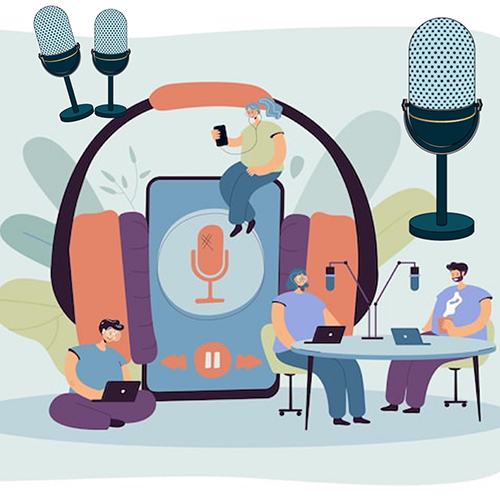
Podcasts offer something social media often can’t. A post might give you ten seconds of someone’s attention. A podcast can give you twenty, thirty, sixty minutes, long enough for personality to emerge. Long enough for a listener to think, I like these people. People don’t always buy books because of clever sales lines. Sometimes they buy because they’ve formed a tiny connection with the writer behind the words, and that matters.
There are downsides, of course. Podcasting takes time. Finding suitable shows takes research. Pitching takes persistence. Rejection’s inevitable. Some interviews will be brilliant, while others feel like you’re slave to a microphone, and there’s no guarantee that appearing on podcasts will suddenly send book sales through the roof.
For us, that isn’t the point. The aim is to leave a trail of breadcrumbs. One conversation leads to another. One listener tells a friend. Someone shares a clip, another becomes curious, then another, and another, and eventually, a fan buys a book. Most importantly, someone remembers us, and even better, we’ve made a difference to a life.
The process of getting started isn’t easy. It takes more than saying, “We’d love to come on your podcast.” It means identifying podcasts where our stories belong:
- Books.
- Writing/editing, and creativity in general.
- Friendship, unlikely or otherwise.
- Chronic autoimmune conditions/Neurodivergence.
- Mental health.
- Resilience.
- Humour.
- The strange business of being human.

It means creating a short, compelling pitch. Not, “We are authors and would like to talk about our books,” but, “What happens when an extrovert with MS and an introvert with GAD and ASD meet, decide to write together, and discover the strange combination works?”
Now there’s a conversation. It means having stories ready. Funny stories. Honest and awkward stories, ones that are unexpected. It means being unafraid to say, “We don’t know,” or resisting the urge to turn every answer into a sales pitch. A crucial element is being memorable, because the objective isn’t to leave every listener thinking, I must buy their book immediately. It’s to leave them thinking, “Who the hell are these two?”
That’s curiosity, which becomes connection, creates an audience, and gives our books something they’ve never had by themselves.
Readers, fans, even.
Yes, we’ll engage in the experiment. Two struggling authors, two diverse brains, two conflicting personalities, and a friendship that shouldn’t work. With a microphone between us, there’ll be no hard sell. No polished author façade. Just conversation, curiosity, laughter, honesty, and we hope, the occasional spectacular derailment.
Maybe the books were never meant to be the whole story, but the evidence that something absorbing happened when two misfits met and created. Maybe that’s the story people want to hear. People buy people. What follows is a by-product, much like Wenark Green’s unlikely friendship.
After while.
Wen x
There comes a point in every author’s life when they must admit writing the book was the easy bit. You spend months—even years—wrestling words into a story. Edit, rewrite, agonise over commas and word repetition, bleed over the cover (not literally), and finally, as indies, press publish. Then … tumbleweed.
We know books don’t sell themselves, so what do two authors do when promotion so far hasn’t harvested fruit on novels that happen to be a by-product of their oddball, unlikely friendship?
Answer: Welcome to our latest batty idea. We’re going podcasting; guesting, not hosting. The decision surfaced not because we’ve morphed into marketing gurus or have discovered the secret to a surfeit of pesky algorithms that don’t like us and our content. And we certainly don’t intend spending forty or so minutes saying, “Our book’s available on Amazon for less than the price of a coffee,” in desperate, clichéd tones.
We, Wenark Green, are going to sell something else first. Ourselves. Us. The madness behind the manuscripts. Not in the egotistical, look-at-us-we’re-authors way, but in the way of letting people discover who, what, and why we are. The peculiar pairing. One an introvert. The other an extrovert. One living with GAD and ASD. The other with MS. One who’d rather converse with a pylon, and regards a crowded room as an endurance event while sniffing out the nearest escape route, and the other who would strike up a chat with a hat, have it confess its sins, then wear it while meditating under a delicate cherry blossom.
On paper, our friendship shouldn’t work. In reality, it does, and somewhere in the middle of this madcap, mismatched collaboration, and a vision of creating a legacy and fuelling a passion, murder mystery books happened. That’s our story, and the facts worth putting in front of people.
The temptation when promoting/selling a book is to make every appearance about the “baby” you’ve written.
- What is it about?
- Who is it for?
- Why should people buy it?
- Where can they get it?
All reasonable questions, but perhaps guaranteed to make listeners mentally wander off to check whether they blew the scented candle out. We know books aren’t babies, but products.
The more powerful proposition’s different.
- Come and meet Wen and Mark.
- Find out why they became friends.
- Discover how they write together.
- Listen to them disagree.
- Hear what makes them laugh.
- Understand what their diagnoses have taught them about themselves, without turning either condition into a marketing gimmick.
Let people hear the chemistry, the chaos, the banter. Let them hear the moments when two converse personalities arrive at the same ridiculous idea. Listeners might wonder what we two oddballs have written. That’s the difference between selling a book and provoking curiosity about the people who wrote it.
Podcasts offer something social media often can’t. A post might give you ten seconds of someone’s attention. A podcast can give you twenty, thirty, sixty minutes, long enough for personality to emerge. Long enough for a listener to think, I like these people. People don’t always buy books because of clever sales lines. Sometimes they buy because they’ve formed a tiny connection with the writer behind the words, and that matters.
There are downsides, of course. Podcasting takes time. Finding suitable shows takes research. Pitching takes persistence. Rejection’s inevitable. Some interviews will be brilliant, while others feel like you’re slave to a microphone, and there’s no guarantee that appearing on podcasts will suddenly send book sales through the roof.
For us, that isn’t the point. The aim is to leave a trail of breadcrumbs. One conversation leads to another. One listener tells a friend. Someone shares a clip, another becomes curious, then another, and another, and eventually, a fan buys a book. Most importantly, someone remembers us, and even better, we’ve made a difference to a life.
The process of getting started isn’t easy. It takes more than saying, “We’d love to come on your podcast.” It means identifying podcasts where our stories belong:
- Books.
- Writing/editing, and creativity in general.
- Friendship, unlikely or otherwise.
- Chronic autoimmune conditions/Neurodivergence.
- Mental health.
- Resilience.
- Humour.
- The strange business of being human.
It means creating a short, compelling pitch. Not, “We are authors and would like to talk about our books,” but, “What happens when an extrovert with MS and an introvert with GAD and ASD meet, decide to write together, and discover the strange combination works?”
Now there’s a conversation. It means having stories ready. Funny stories. Honest and awkward stories, ones that are unexpected. It means being unafraid to say, “We don’t know,” or resisting the urge to turn every answer into a sales pitch. A crucial element is being memorable, because the objective isn’t to leave every listener thinking, I must buy their book immediately. It’s to leave them thinking, “Who the hell are these two?”
That’s curiosity, which becomes connection, creates an audience, and gives our books something they’ve never had by themselves.
Readers, fans, even.
Yes, we’ll engage in the experiment. Two struggling authors, two diverse brains, two conflicting personalities, and a friendship that shouldn’t work. With a microphone between us, there’ll be no hard sell. No polished author façade. Just conversation, curiosity, laughter, honesty, and we hope, the occasional spectacular derailment.
Maybe the books were never meant to be the whole story, but the evidence that something absorbing happened when two misfits met and created. Maybe that’s the story people want to hear. People buy people. What follows is a by-product, much like Wenark Green’s unlikely friendship.
After while.
Wen x